


Being a freelancer means you’re in charge. While this freedom is great, it also means you’re responsible for your own focus. The biggest challenge isn’t working versus relaxing; it’s choosing the right kind of work.
The Trap: Shallow Work vs. Deep Work
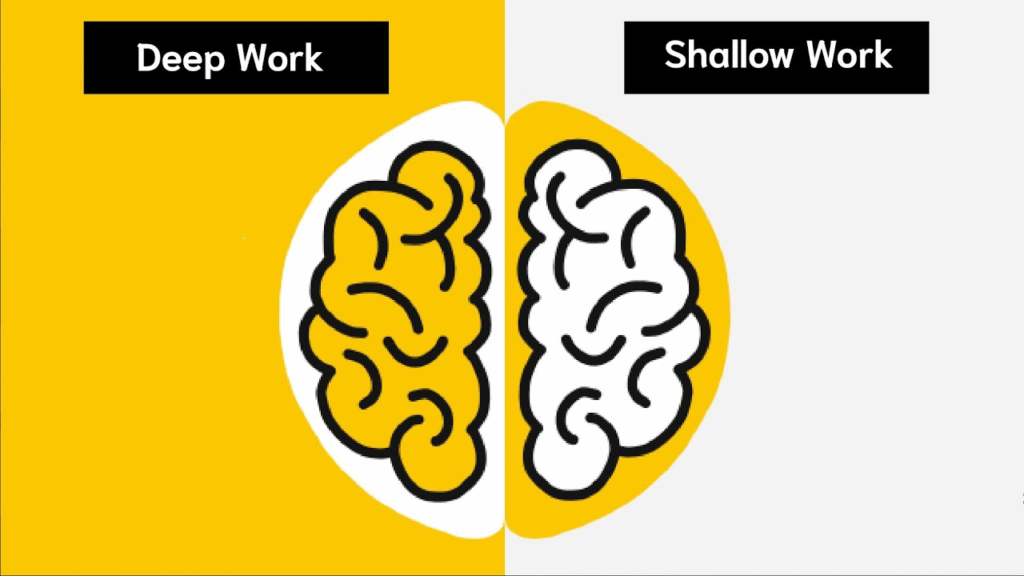
It’s easy to feel productive by doing small, easy tasks. We call this Shallow Work.
- Shallow Work: Answering emails, cleaning your desk, organizing files, or doing laundry. These tasks feel good to finish but don’t help you reach your big goals.
The work that truly grows your career is Deep Work.
- Deep Work: This is the challenging, focused work that requires your full concentration. Examples include writing code, designing a new brand, or developing a business plan. This is the work that gets you hired and paid well.
The trap is spending your whole day on Shallow Work because it’s easier and gives you a quick sense of accomplishment. To succeed, you must prioritize Deep Work.
4 Steps to Better Focus

Discipline isn’t about forcing yourself to work; it’s about building a smart system. Here’s a detailed guide.
Step 1: Clearly Define Your Goal
You can’t hit a target you can’t see. Before you start your week, identify the one to three most important tasks that count as Deep Work. Don’t create a long to-do list. Just ask yourself: “What work, if I complete it, will make the biggest difference to my career?” Write it down.
- Example: Instead of “Work on website,” your goal should be “Write the ‘About Me’ page for my website.”
Step 2: Make It Too Small to Fail
Starting is the hardest part. Use the Two-Minute Rule to beat procrastination. Shrink your big goal into a tiny, two-minute task that’s easy to start.
- If your goal is to “Write a book chapter,” your two-minute task is “Open the document and write one sentence.”
- If your goal is to “Learn a new software,” your two-minute task is “Watch the first two minutes of a tutorial.”
This small action builds momentum and makes it much easier to keep going.
Step 3: Schedule Your Deep Work
Don’t just add your big goals to a to-do list. Give them a specific time to live on your calendar. This technique is called Time Blocking.
Treat these time blocks like important appointments you can’t miss. When it’s 9 AM and your calendar says “Work on Client Project,” that’s all you do. Turn off your phone, close other tabs, and focus only on that task for the scheduled time (e.g., 90 minutes).
Step 4: Create a “Work is Done” Ritual
Your brain needs a clear signal that the workday is over. Otherwise, you’ll feel like you should always be working, making it hard to relax or do chores without guilt.
Create a shutdown ritual. At the end of your planned workday, do the same things every time:
- Review your work for the day.
- Write down your plan for tomorrow.
- Clean your desk.
- Say a specific phrase out loud, like “Work is done for the day.”
This simple habit creates a boundary. After this, you are free to do chores, relax, and recharge, knowing you did the important work first. ✅